e-Learning Course
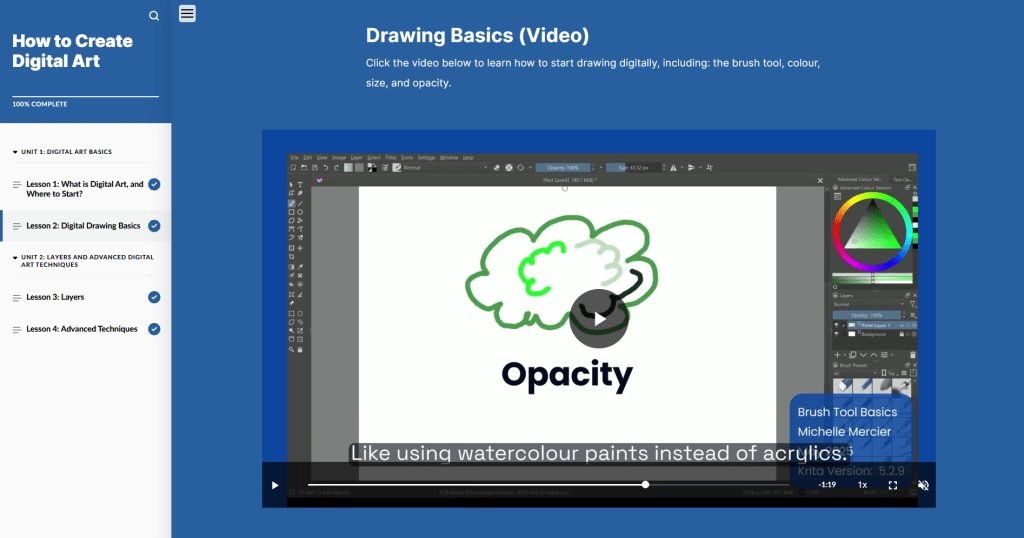
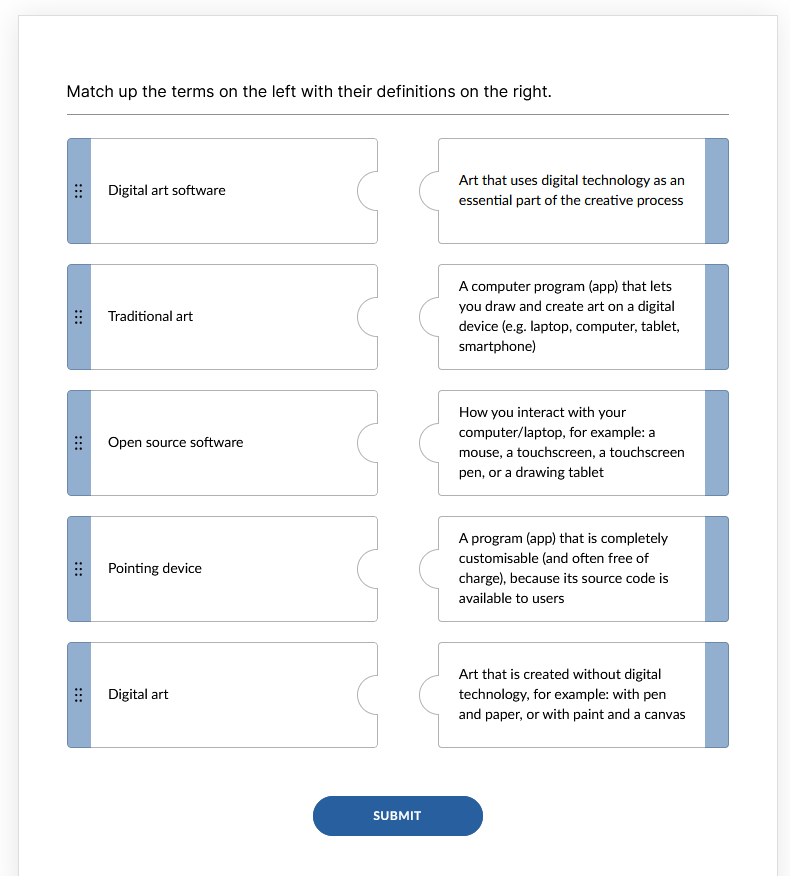
I created an e-learning course to teach learners how to create digital art. This course covers everything from the basics of what digital art is, to creating a simple digital art piece. By the end of the course, the learner will be able to create a piece of digital art and will have the skills to continue learning on their own.
Why I chose this project
This e-learning course is the culmination of everything I learned on the master’s course. It showcases all of the skills needed to be an effective interaction designer: Planning, research, original research, organisation, creativity, willingness to learn new programs/software, creating learning objectives, writing, video recording, video editing, audio recording, audio editing, creating knowledge checks, chunking content, sequencing content, and publishing an e-learning course.
Examples Slideshow
Background
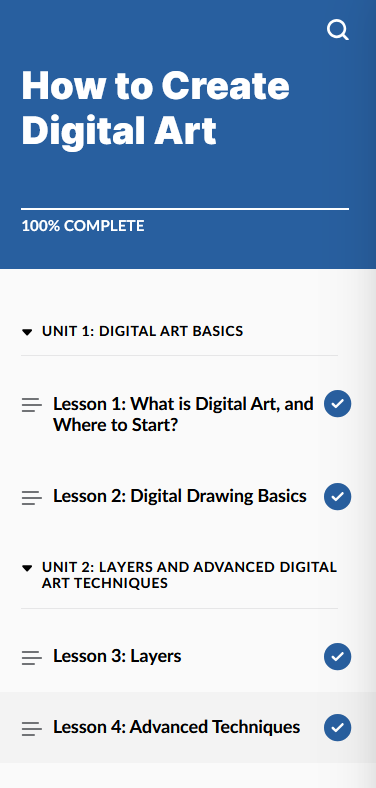
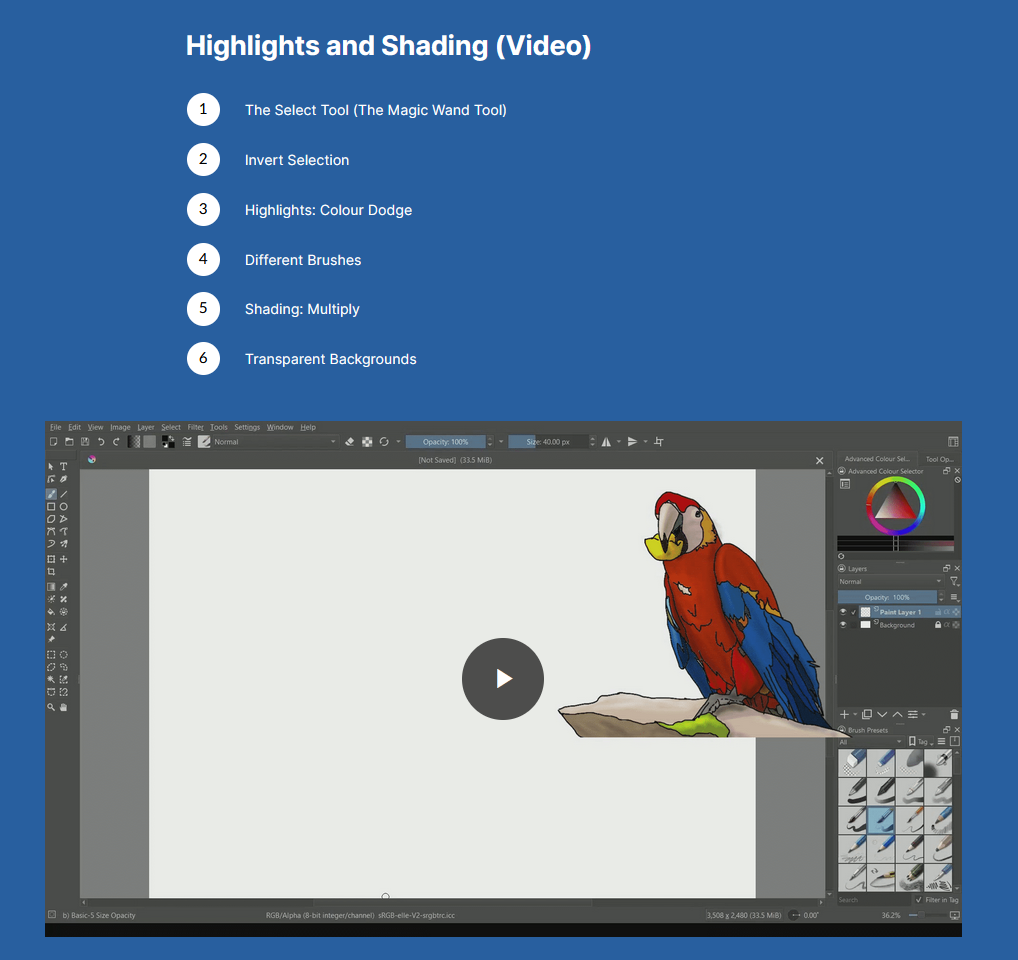
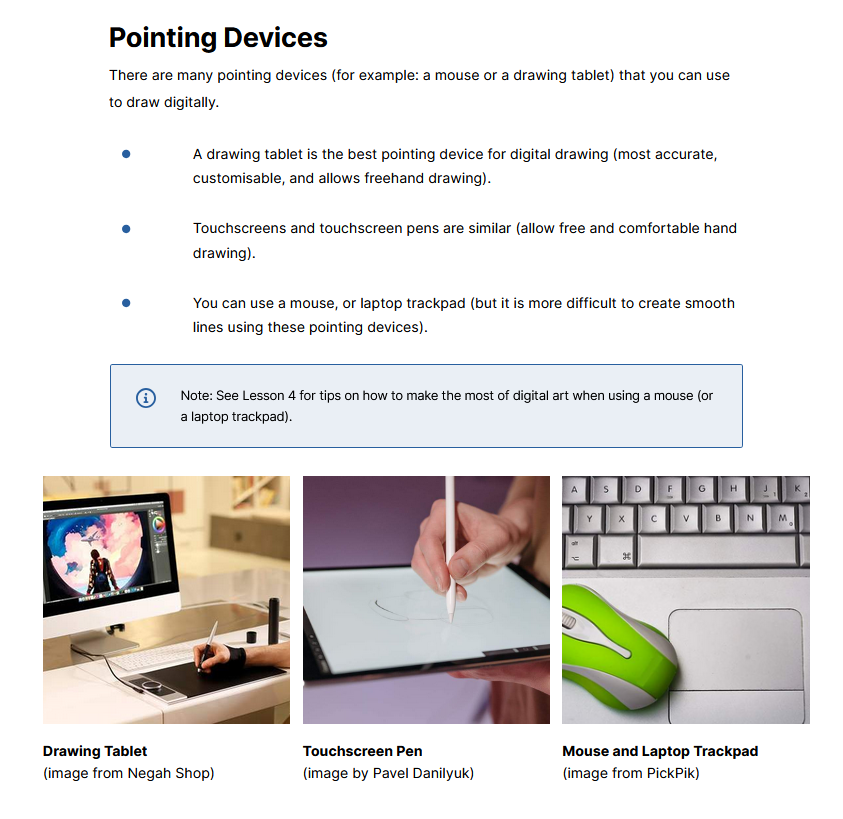
For this e-learning course I developed two units, four lessons, and three videos (videos are approx 5-10 minutes each).
Development Phases
I developed the e-learning course from start to finish. This involved:
- Research and Proposal
- Proposed design and mock-ups
- In-person interviews
- Online survey
- Design
- Development
- Publishing
Development Tools
I used a variety of digital tools to create this e-learning course.
- Articulate Rise 360: E-learning course authoring tool.
- OBS: Screen-recording software, for recording the demonstrations.
- Powtoon: Animation website, for adding animations to videos.
- Audacity: Audio-editing software, for sound enhancement, clipping, adding music, and sound effects.
- Krita: The digital art program I was demonstrating how to use.
- Microsoft Forms: Website for creating an online survey.
Transferable Skills
Communication: Conducted in-person interviews, and designed an online survey to inform the course content.
Creativity: Designed videos to demonstrate the skills taught on the e-learning course.
Critical Thinking: Interpreted the interview and survey results and incorporated the needed changes into the course. Organised the course in a sequential way to best meet the learning objectives.
Digital Skills: Used multiple digital tools to author the course, create and edit videos (with audio and sound effects), and to create the online survey.
Problem Solving: Changed the course structure to add the extra information identified as needed by the survey.
What I learned
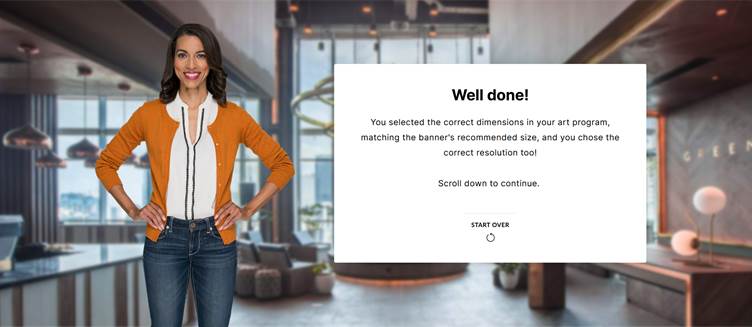
I learned a great deal about creating an e-learning course. I learned how to create and publish a course in Articulate Rise 360. I learned how to create interactive knowledge checks, including building scenarios.
If I were to create this course again, I would allow more time for video creation. I created effective videos for three of the lessons. I would like have had an instructional video in all four lessons.
→
 Michelle Mercier